Parapets, scuppers and canales
Flat Roof and Parapet Leak Damage in Sahuarita, AZ
Flat and low-slope roof sections are everywhere in Southern Arizona, and they are the single most common way monsoon water gets into a house here. This guide explains how those roofs are built, where they fail, how the damage shows up inside, and how it's dried and repaired.
Talk to someone who understands how these roofs shed water.
Flat Roof Leak? (520) 650-1359- Available 24/7
- Emergency response
- Upfront pricing before work begins
- No hidden fees
- Workmanship guarantee on completed work
- Crews familiar with Santa Cruz Valley homes
First hour
What to do while water is coming through
When a flat roof section lets water in during or after a storm.
-
Catch it and clear the area
Buckets under drips, belongings moved away, rugs lifted. Look in closets under the same roof section too.
-
Mind the electrical
If water is near outlets or panels, do not enter and call your utility and emergency services.
-
Leave the ceiling to the crew
Flat-roof ceilings can hold a surprising amount of water. Don't press on a bulge; keep the space beneath it empty.
-
Look at walls, not just ceilings
Parapet leaks often run down inside an exterior wall. Check baseboards and wall corners below parapets and scuppers.
-
Photograph from the ground
If you can see ponding, overflowing scuppers or water running down stucco from the yard, a photo helps the roofer later.
-
Stay off the roof
Clearing drains during a storm rarely helps inside. Let a roofer look once the surface has dried.
Water on the roof and a stain below? We'll talk through the next step.
Call About Ponding WaterHow these roofs work
Anatomy of a Southwest flat roof
Very few "flat" roofs are truly flat. They're built with a gentle slope, often with tapered insulation or small raised ridges called crickets, to steer water toward the exits. Around the edge, a parapet wall rises above the roof surface. It hides equipment and gives the house its clean Southwest profile, but it also means water can't simply run off the edge.
Instead, water leaves through openings in the parapet:
- Scuppers: rectangular openings through the parapet, sometimes with a collector box and downspout.
- Canales: projecting channels that throw water clear of the wall, typical on Pueblo-style homes.
- Roof drains: interior drains that carry water down through the building.
The roof surface itself is usually a membrane, a spray foam system with a protective coating, or a built-up or modified roof. Where the membrane turns up the inside of the parapet, it's terminated under a cap or coping on top of the wall. That joint, and the cap itself, are where many leaks start.
Where they fail
Why flat roof sections leak in the Santa Cruz Valley
Ponding during monsoon storms
A monsoon cell can drop water faster than scuppers and drains can carry it. If an exit is partly blocked by leaves, a bird's nest, gravel or a wind-blown bag, the water level rises. Ponded water sits on seams and laps that shed light rain without trouble, and it finds the smallest gap.
Parapet caps and terminations
Parapet caps crack and separate after years of sun and heat. Stucco on the parapet develops hairline cracks. Water gets into the top or side of the wall and runs down inside it, so the stain appears on an interior wall, sometimes a room away from the scupper.
Scupper and canale joints
The opening through the parapet has to be sealed to the roof membrane on the inside and flashed on the outside. When that seal fails, water enters the wall right at the scupper. Staining or white mineral deposits on the stucco below a scupper are a common sign.
Coatings and heat
Roof coatings reflect heat and protect the surface below, but they wear thin under the Arizona sun and need periodic recoating. Blistering, cracking or chalky coatings are an early warning. So is water still standing on the roof a day or two after a storm.
Equipment on the roof
Evaporative coolers, package units and vents often sit on flat sections. Each curb and penetration is a place the membrane is interrupted, and each needs sound sealant. See evaporative cooler leak damage for the cooler-specific risks.
Stains on walls, not just ceilings, often trace back to the parapet.
Ask About the Stain Under the Parapet
Inside the house
What flat roof leak damage looks like indoors
Because the space between a flat roof and the ceiling can be shallow, water spreads out quickly across the back of the drywall and through insulation. It often shows up in more than one place:
- A broad, irregular stain rather than a neat ring, sometimes with several centers.
- Water tracking along a ceiling joint or corner bead.
- Stains high on an exterior wall directly below a parapet.
- Wet baseboards or swollen trim on an exterior wall with no plumbing nearby.
- Peeling paint or loose texture on a ceiling that was fine last summer.
- A stain that stops, dries and returns with the next storm.
That last pattern is common, and easy to live with for a season. The trouble is what you can't see: insulation that stays compressed and damp, and framing that gets wet storm after storm. Moisture readings show whether the problem is contained or spreading.
Unsure whether it's the roof or something else? That's a normal first question.
Talk to Someone Who Knows Flat RoofsBefore July
Keeping a flat roof ready for monsoon season
Most flat roof leaks can be prevented with a spring check by a roofer, ideally in May or June:
- Clear every scupper, canale and drain, and the path water takes to reach them.
- Inspect parapet caps, coping joints and the membrane termination along the parapet.
- Look for cracks in parapet stucco and seal them.
- Check the roof coating for blistering, cracking or thin spots.
- Check sealant at every curb, vent and penetration, including the cooler.
- Note any low spots where water sat after the last storm.
After significant storms, a look from the ground at scuppers and downspouts, and a walk under flat sections inside the house, catches most problems early. The full seasonal checklist is on our monsoon storm water damage page.
Roof types
Common flat roof systems here, and how each tends to fail
Your roofer can tell you exactly what's on your house, but most flat sections in the Santa Cruz Valley use one of a few systems. Knowing which one you have helps make sense of where a leak is likely to start.
Spray foam with a coating
Foam is sprayed onto the roof deck to form a seamless layer, then covered with a light-colored elastomeric coating that shields it from the sun. The foam itself is durable; the coating is what wears. Once it thins or cracks, sunlight degrades the foam beneath and small pits collect water. Periodic recoating is part of owning this kind of roof.
Modified bitumen
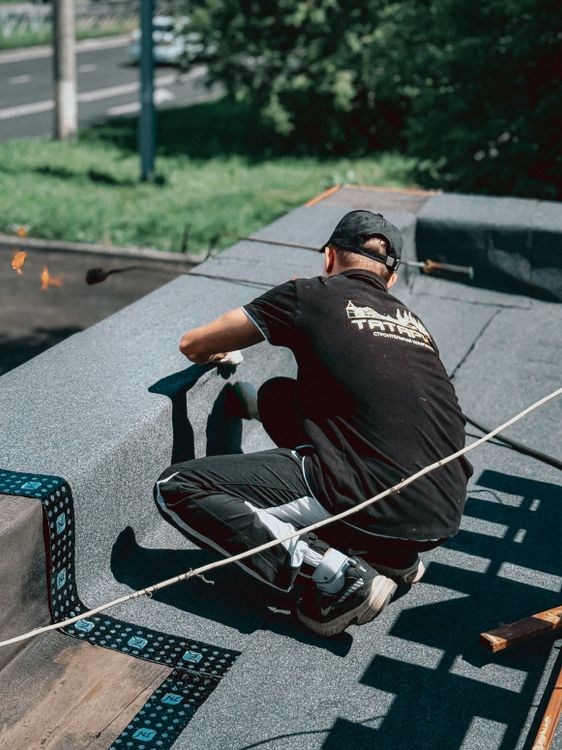
Rolled sheets, often torch-applied or self-adhered, lapped over one another. The laps are the weak points, along with the edges where sheets turn up the parapet. Blisters and open laps are common warning signs.
Single-ply membranes
Large sheets of a synthetic membrane with heat-welded or taped seams. Leaks tend to show at seams, around penetrations and at the parapet termination rather than in the open field.
Built-up roofs
Layers of felt and asphalt, sometimes topped with gravel. Common on older or commercial buildings. Gravel can wash into scuppers and drains in a heavy storm, which is one more reason to clear them before monsoon season.
Whatever the system, the details matter more than the field: parapet terminations, scuppers, drains and every curb or vent. That's where a roofer will look first, and where interior stains usually point.
Shared walls
Attached homes, townhomes and HOA roofs
On attached homes, one flat roof can span two or more units, and a leak over your neighbor's ceiling can run along the deck and show up in yours. Responsibility for the roof may sit with the owners or with the association, depending on your community's documents. When water crosses a shared wall, it helps to have one restoration crew measure both sides so the drying plan covers the whole wet area rather than stopping at the property line.
If your HOA handles roofs, let the management office know as soon as you see a stain, and share your photos. The restoration crew can work alongside the association's roofer.
Time, cost, and what comes after
Interior drying for a flat roof leak commonly takes a few days. The scope depends on how many storms the leak has been through, how much insulation got wet, whether water reached wall cavities under the parapet, and how much ceiling needs replacing. A single leak caught after one storm can be small; a leak that's been ignored through a season is usually larger.
You'll hear the price for the interior work before it begins. Roof repairs are quoted separately by a roofing contractor. For insurance questions, coverage depends on your individual policy and circumstances, and only your insurer can tell you; the contractor can provide documentation of the work performed.
Once the roof is repaired and the interior is dry, ceilings and walls are rebuilt, textured and painted. Keep the roofer's paperwork and the drying records together, and put a pre-monsoon roof check on the calendar every spring.
How the work is done
How flat roof leak damage is restored
Interior work runs alongside the roof repair, in a set order.
Map the water
Meters and thermal imaging trace the wet area across ceilings and down exterior walls, helping the roofer find the entry.
Arrange temporary protection
If the roof can't be repaired immediately, temporary protection keeps the next storm out while drying runs.
Remove saturated materials
Sagging ceiling drywall and soaked insulation are removed in controlled sections.
Dry ceilings and wall cavities
Air is directed into the ceiling space and, where needed, into walls under the parapet. Dehumidifiers handle monsoon humidity.
Confirm dry
Readings in framing and drywall are compared with unaffected areas until they match.
Rebuild after the roof is fixed
New drywall, insulation, texture and paint, once the roofer's repair is complete.
Interior pricing is explained before any work begins.
Get the Wet Ceiling DriedFlat roof and parapet leak questions
Why is there a stain on my wall instead of my ceiling?
Parapet leaks often send water down inside the exterior wall. It surfaces as a stain high on the wall, or as wet baseboards, rather than on the ceiling.
Is ponding on a flat roof normal?
A little water right after a storm is common. Water still standing a day or two later suggests a low spot or a partly blocked exit, and a roofer should look at it.
What are the white deposits on the stucco below my scupper?
Often minerals left behind as water seeps through and evaporates. They're a sign water is getting into or behind the stucco around the scupper.
Can the restoration crew fix the roof?
Roof repair is a roofing contractor's job. The restoration crew dries and repairs the inside and can coordinate with your roofer.
The stain dried up. Can I ignore it?
It may come back with the next storm, and insulation or framing above it may still be damp. A moisture check tells you whether it's contained.
How often should a flat roof be looked at?
A yearly check before monsoon season is a sensible habit, plus a look after any severe storm. Your roofer can advise on recoating intervals for your roof type.
Does a flat roof leak mean I need a new roof?
Not usually. Many leaks are at a specific seam, scupper, cap or penetration and can be repaired. Your roofer will tell you if the whole surface is at the end of its life.
Why does the leak only show up in some storms?
Wind direction and rainfall rate matter. A storm from one direction drives water against a particular parapet, and a very heavy burst overwhelms a scupper that handles ordinary rain.
What about the cooler on my flat roof?
The cooler's curb is a common leak point in heavy rain, and the cooler itself can leak in dry weather. Both are worth checking before the season starts.
Who fixes a leak on an attached home or townhouse?
That depends on your HOA's rules. Some associations maintain roofs on attached homes. Your HOA documents or management office can tell you.
More help for roof-origin water
-
Roof Leak Water Damage
Tracing roof water to its entry point and drying below. -
Monsoon Storm Water Damage
Roof, doorway and runoff intrusion from summer storms. -
Evaporative Cooler Leak Damage
Float valve, pan and supply line failures over ceilings. -
Ceiling Water Damage Repair
Stains, sagging drywall and wet insulation overhead. -
Drywall Water Damage Repair
Removing wet drywall, drying the cavity, rebuilding. -
Moisture Detection & Inspection
Meters and thermal imaging to find hidden moisture.
Stain under a flat roof section? Let's find out how far it goes.
Moisture readings, a plan, and a price before anything starts.
Straight answers and a local crew, day or night.
Call About Low-Slope Roof Water