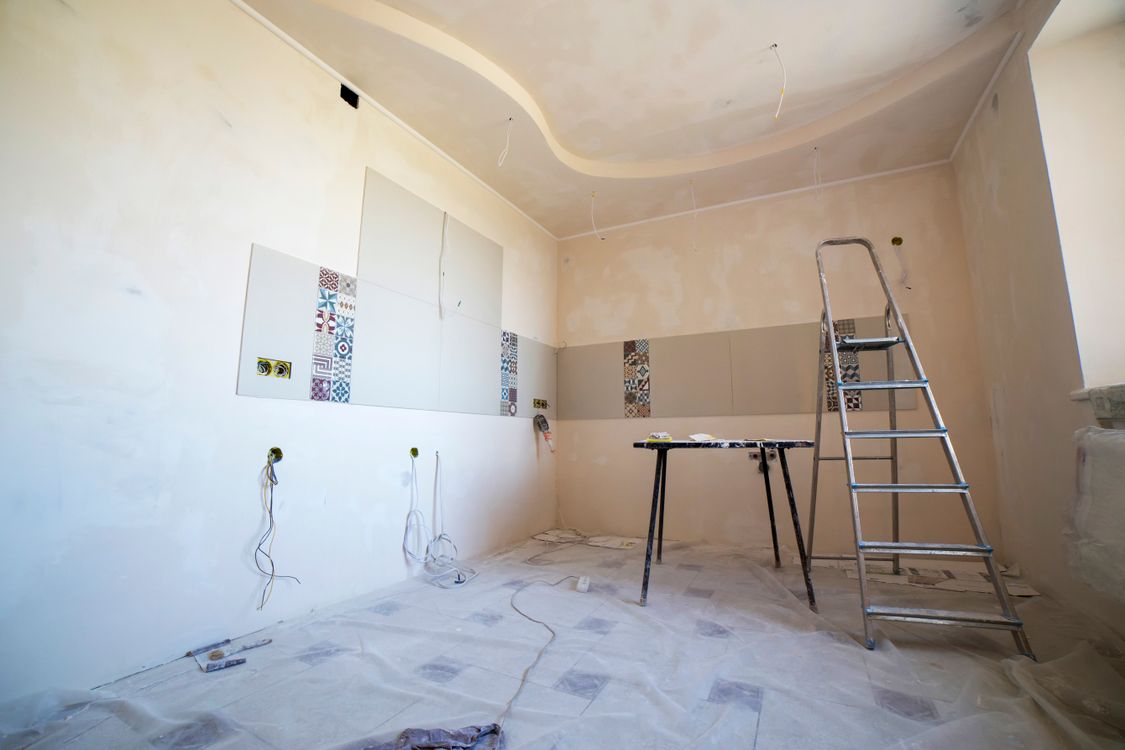
Hard floors on a concrete slab
Tile and Laminate Floor Water Damage in Sahuarita, AZ
Tile, laminate and vinyl plank are everywhere in Santa Cruz Valley homes, and they all sit on a concrete slab. When water gets under them it has nowhere to go but sideways. Knowing which floors can be dried in place, and which need to come up, saves money and disruption.
Tell us the floor type and roughly how far the water went.
Wet Flooring? Call (520) 650-1359- Available 24/7
- Emergency response
- Upfront pricing before work begins
- No hidden fees
- Workmanship guarantee on completed work
- Crews familiar with Santa Cruz Valley homes
The problem
What water does under hard flooring
Hard flooring looks watertight, and on the surface it mostly is. Underneath, it isn't. Water finds grout lines, plank joints and the gaps at walls, then spreads across the slab under the floor. From there it wicks into baseboards and the bottom of drywall.
How much damage that causes depends on the flooring:
- Ceramic and porcelain tile are unaffected by water themselves. Grout and thinset hold some moisture, and water can sit under hollow tiles.
- Laminate has a fiberboard core that swells when wet, especially at the edges. Swollen laminate rarely returns to flat.
- Luxury vinyl plank resists water on the surface, but water that gets under it is trapped against the slab.
- Engineered wood can cup or delaminate depending on how long it was wet.
What owners usually notice
- Grout that stays dark after the surface is dry.
- Tiles that sound hollow when tapped.
- Laminate edges peaking or cupping.
- Planks that feel soft or move underfoot.
- Water seeping up at the edges when you step near a wall.
Local conditions
Hard floors in Sahuarita homes
Slab-on-grade construction is the norm here, and hard flooring is popular for good reason in a warm, dusty climate. Many homes have tile or plank running continuously through the kitchen, living areas and hallways, with no thresholds between rooms.
That continuity matters after a water loss. Water spreads further under a continuous floor, and replacing one area means finding flooring that matches the rest. Discontinued tile or plank is a real issue in homes that are ten or fifteen years old.
The sources are usually local ones: an appliance line, a dishwasher, a water heater, a slab leak, or monsoon water coming in under a patio door. Each spreads under flooring in its own way.
Many tile floors can be dried in place. A crew can tell you.
Ask If Your Floor Can Be Saved
Dry it or lift it
When hard floors can be saved
Tile
Tile over a slab can usually be dried in place with the right equipment. Air movers and dehumidifiers pull moisture out through grout lines, and specialized drying can target specific areas. Hollow or loose tiles may need resetting afterward, and grout may need cleaning or replacing.
Laminate
If water was caught very quickly and planks haven't swollen, laminate can sometimes be dried. More often, planks in the wet area are removed so the slab beneath can dry, and the damaged section is replaced.
Luxury vinyl plank
The planks themselves usually survive, but they trap water against the slab. Floating vinyl floors are often lifted, the slab dried, and the planks reinstalled if they're in good condition.
Engineered wood
Depends on how long it was wet and how it's installed. Specialized drying can save some; cupped or delaminated boards usually need replacing.
Readings show what's still wet beneath the surface.
Get Readings Under the TileSources
Where water under hard floors comes from here
Inside the house
Appliance lines, dishwashers, water heaters and supply lines are the most common indoor sources. They often start at a single point and spread outward under continuous flooring. See appliance leaks and water heater leaks.
Under the slab
A slab leak brings water up from below, so the flooring may be wet across an area with no visible source. Warm spots and a moving water meter are the usual clues; see slab leak water damage.
From outside
During monsoon season, runoff can push under patio and garage doors. That water often carries grit and dust into grout lines and under planks, and it's cleaned as well as dried.
What to tell the crew
It helps to know the flooring type and brand if you have them, whether it's glued or floating, roughly when it was installed, and whether you kept any spare boxes. That speeds up both the drying plan and any replacement.
Glued, floating or tiled: what sets the timeline
The main factors are how far water spread under the floor, the flooring type, whether it's glued or floating, whether flooring runs continuously into other rooms, and whether matching replacement material is available. Tile dried in place is typically less disruptive than lifting laminate.
Drying commonly takes a few days; the slab can take longer than the surface. You'll hear the price before work starts. How your policy applies is a question for your insurer; the contractor can supply photos and readings that record the work.
After drying, tiles that sound hollow when tapped have usually lost their bond to the slab. Those are normally lifted and reset rather than left in place, because a loose tile tends to crack under foot traffic and lets water back under the floor the next time something spills.
Matching the floor once the slab is dry
Once the slab is confirmed dry, flooring is reset or replaced. If an exact match isn't available, options include using a transition at a doorway, replacing a larger continuous area, or choosing a complementary floor for a whole room. The reconstruction and repairs page explains how that stage usually goes.
Keep a few spare planks or tiles after any flooring job. They're the easiest way to repair a small area next time.
For laminate and vinyl plank in kitchens and laundry rooms, a small leak sensor near each appliance gives early warning before water has time to travel under the floor. It is a modest cost next to lifting and replacing a continuous run of planks across several rooms.
How the work is done
How hard floor water damage is dried and repaired
Measure first, then decide what stays.
Find the edges of the water
Meters and thermal imaging map where water went under the floor.
Extract
Surface water and water in grout lines is extracted.
Lift what traps water
Laminate, floating vinyl or damaged boards in the wet area may be lifted.
Dry the slab and walls
Air movers, dehumidifiers and targeted drying for grout lines and wall bases.
Verify dry
The slab is measured until readings match unaffected areas.
Reset or replace
Flooring is reinstalled or replaced, with loose tiles reset and grout repaired.
Pricing and approach explained before anything starts.
Talk About Laminate and LVPTile and laminate floor questions
Can water get under tile?
Yes. It moves through grout lines and around edges and can sit under hollow tiles. Readings through the tile show whether it's there.
Does wet laminate always have to be replaced?
Not always, but often. Laminate that has swollen at the edges rarely flattens again. If it's caught quickly and hasn't swollen, it may be dried.
Isn't vinyl plank waterproof?
The surface is. Water that gets underneath is trapped against the slab, so the planks may need lifting for the slab to dry.
How long does a slab take to dry?
Longer than the surface. The crew monitors the slab until readings are normal before flooring is reinstalled.
What if I can't find matching flooring?
Options include a transition at a doorway, replacing a larger area, or a complementary floor for a room. The crew can help you weigh them.
Will the grout need replacing?
Sometimes. Grout that stays discolored or cracks may be cleaned or replaced once the area is dry.
Can I walk on the floor during drying?
Usually, with care. Equipment will be placed in the room, and the crew will let you know if any area should be avoided.
Why are my baseboards wet too?
Water under flooring wicks up into baseboards and the bottom of drywall. They're measured and dried, or removed if they've swollen.
Does it matter if the floor is glued or floating?
Yes. Floating floors can be lifted and sometimes reinstalled. Glued floors are usually dried in place or replaced.
Should I pull up wet laminate myself?
It's better to wait for readings. The crew can tell you exactly which planks need to come up, and lifting them carefully improves the chance of reusing some.
Related flooring services
-
Slab Leak Water Damage
Leaks under the concrete and the reroute-or-repair choice. -
Water Extraction & Removal
Pulling standing water off slabs, carpet and tile. -
Appliance Leak Water Damage
Refrigerator lines, ice makers and other connections. -
Structural Drying & Dehumidification
Drying planned for desert air and confirmed with readings. -
Drywall Water Damage Repair
Removing wet drywall, drying the cavity, rebuilding. -
Reconstruction & Repairs
Putting drywall, floors and finishes back after drying.
Water under the floor? Let's see how far it went.
Readings, a plan, and pricing upfront.
A local crew and a clear plan.
Get Floor Drying Started